


 EN
EN  PL
PL  UK
UK 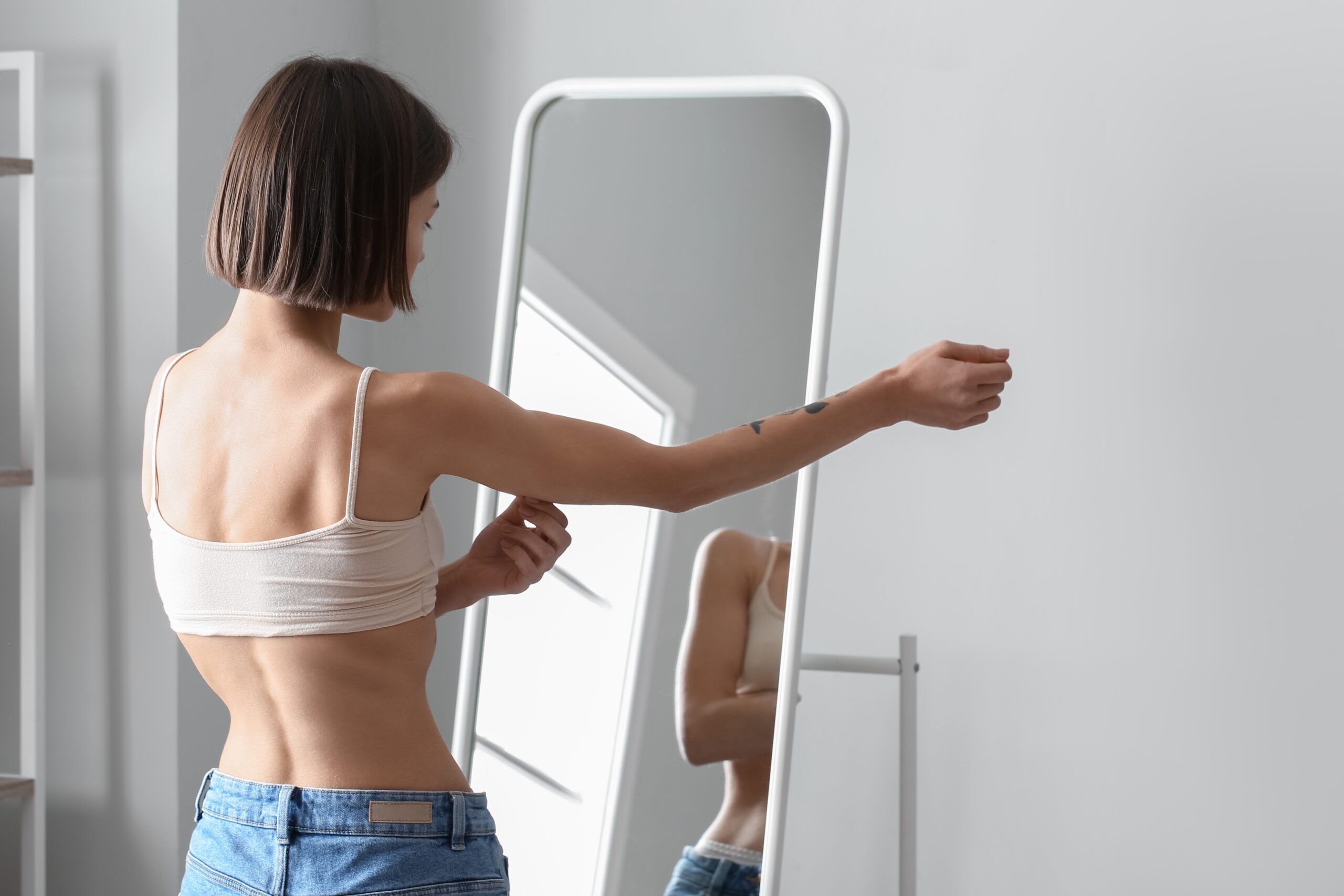
Co znajdziesz w tym artykule:
WHAT ARE EATING DISORDERS?
Eating disorders are złożone mental health problems that require an individual approach and specialised help. If ignored, they can lead to serious health consequences and even death. Unfortunately, they are more prevalent in the fitness and sports world than in other social groups.
These disorders are divided into specific (e.g. anorexia, bulimia) and non-specific (e.g. overeating attacks, orthorexia, bigorexia, pregorexia). Bigorexia is the relentless pursuit of increasing muscle mass, often at the expense of health, and orthorexia manifests as obsessive eating „clean” and avoiding foods outside of one's own list. Each of these disorders requires understanding, diagnosis and treatment.
Eating disorders can be cured - but early recognition of the problem and support from loved ones are key. Acceptance, empathy and the right environment are the foundations of successful treatment.
HOW TO SPOT A PROBLEM?
The symptoms may be subtle, but are often repeated in the behaviour and appearance of the sufferer. Physical signs include suddenly wearing loose clothing, feeling cold, avoiding communal meals, going to the toilet immediately after eating or swallowing food quickly without chewing.
On an emotional level, a person with the disorder often withdraws from social life, talks mainly about diet and training, avoids eating in public and is reluctant to talk about themselves. Spotting such signals early can save health and even lives.
WHO IS AFFECTED?
Eating disorders can affect anyone - regardless of age, gender or social status. However, they are most common in young women and teenage girls who feel pressure to look their best and have low self-esteem. The problem often starts with the pursuit of the ideal we see on social media.
It is worth remembering that an eating disorder is not a „diet issue” - it is an illness that has a deeper emotional basis. Root cause analysis and psychological support are key in the healing process.
WHO TO TURN TO FOR HELP?
If you suspect an eating disorder in yourself or a loved one, your first step should be to see your GP. He or she will order basic tests to rule out other diseases (e.g. diabetes or thyroid problems).
It is then worth consulting a psychologist or psychodietitian. Therapy often takes time and commitment, but has real results. In the case of children and adolescents, it is necessary to work with the whole family to find the source of the problem and prevent it from returning.
Judgements, comments about appearance and pressure about food should be avoided in relationships with the person who is ill. Most importantly show support and understanding.
PREVENTION OF EATING DISORDERS
The best prevention is moderation and a healthy approach to the body. Moderation in your workouts, in your diet and in your calorie counting keeps you balanced. It is worth choosing a balanced eating plan that does not exclude your favourite foods.
Training should be a source of pleasure, not a punishment. It is equally important to take care of recovery - at least 24 hours after light training and 48 hours after strength training. Learning to work with your emotions, communicating your needs and being assertive also helps.
A trainer or nutritionist plays a key role - they should determine the realistic objectives and nurture a healthy relationship with your body. Remember that photos on social media often do not reflect reality. Everyone's body is different and true success is about health and wellbeing.
If you're looking for support with a healthy approach to training and diet, get in touch with a Just GYM personal trainer - we'll help you achieve your goals without pressure and with care for your health.
Frequently Asked Questions (FAQ)
Frequently Asked Questions (FAQ)
These are serious mental problems often found in sport. Orthorexia manifests itself as an obsession with „clean” eating, while bigorexia is the relentless drive to increase muscle mass regardless of the health costs.
Physically, this may include avoiding shared meals, feeling cold or sudden changes in clothing (loose clothing). Emotionally, the sufferer withdraws from social life, focusing almost exclusively on diet and rigorous training.
Although the problem can affect anyone, statistically it most often affects young women and teenage girls under pressure from social media ideals. However, it is increasingly being diagnosed in physically active men.
The first step should be a visit to the family doctor for a basic examination. Next, the help of a psychologist, psychiatrist or psychodietitian is crucial to help work through the emotional source of the problem.
It is based on exercising and dieting in moderation and building a healthy relationship with your body. It is important to use balanced eating plans and ensure adequate recovery so that training is a pleasure and not a compulsion.
Summary:
- Eating disorders are serious mental health problems, which can lead to health consequences, including death, if not diagnosed early.
- A distinction is made between specific disorders (anorexia, bulimia) and non-specific (overeating attacks, orthorexia, bigorexia, pregorexia).
- Symptoms include changes in behaviour, appearance and emotions, and the risk mainly affects young women and teenagers.
- Early recognition, support from loved ones and consultation with a doctor, psychologist or psychodietician are crucial for treatment and prevention. Prevention is based on moderation in diet and training, a healthy approach to the body and taking care of recovery and emotions.
Bibliography
- Latey, P. (2002). The Pilates method: history and philosophy. Journal of Bodywork and Movement Therapies, 6(4), 275-282.
Muscolino, J. E., & Cipriani, S. (2004). Pilates and the “powerhouse” - I. Journal of Bodywork and Movement Therapies, 8(1), 15-24. - Segal, N. A., Hein, J., & Basford, J. R. (2004). The effects of Pilates training on flexibility and body composition: An observational study. Archives of Physical Medicine and Rehabilitation, 85(12), 1977-1981.
- Kloubec, J. A. (2011). Pilates for improvement of muscle endurance, flexibility, balance, and posture. Journal of Strength and Conditioning Research, 25(11), 3122-3131.
Important: The contents of this article are solely informational and educational and do not constitute professional medical advice. If you have a serious medical condition or health problem, consult your doctor before you start exercising. The use of the information contained in the article is at the user's own risk.
Publication: Just GYM | Update: 18.03.2026 r.